The short answer
A face recognition intercom is a video door station that unlocks the door when it recognises a registered resident, while visitors still call the indoor monitor. The Spark I-500 and I-400 store up to 5,000 faces, with liveness detection on by default, plus up to 2,000 IC or NFC cards and codes. For fingerprints, the Spark I-220 stores 500 fingerprints and 1,000 IC cards.
On this page
How does a face recognition intercom work?
A face recognition intercom is a video door station whose camera knows the residents. When a registered person looks at it, the station matches the face and releases the door through its lock relay. A visitor who isn't registered presses call instead, and the resident decides from the indoor monitor.
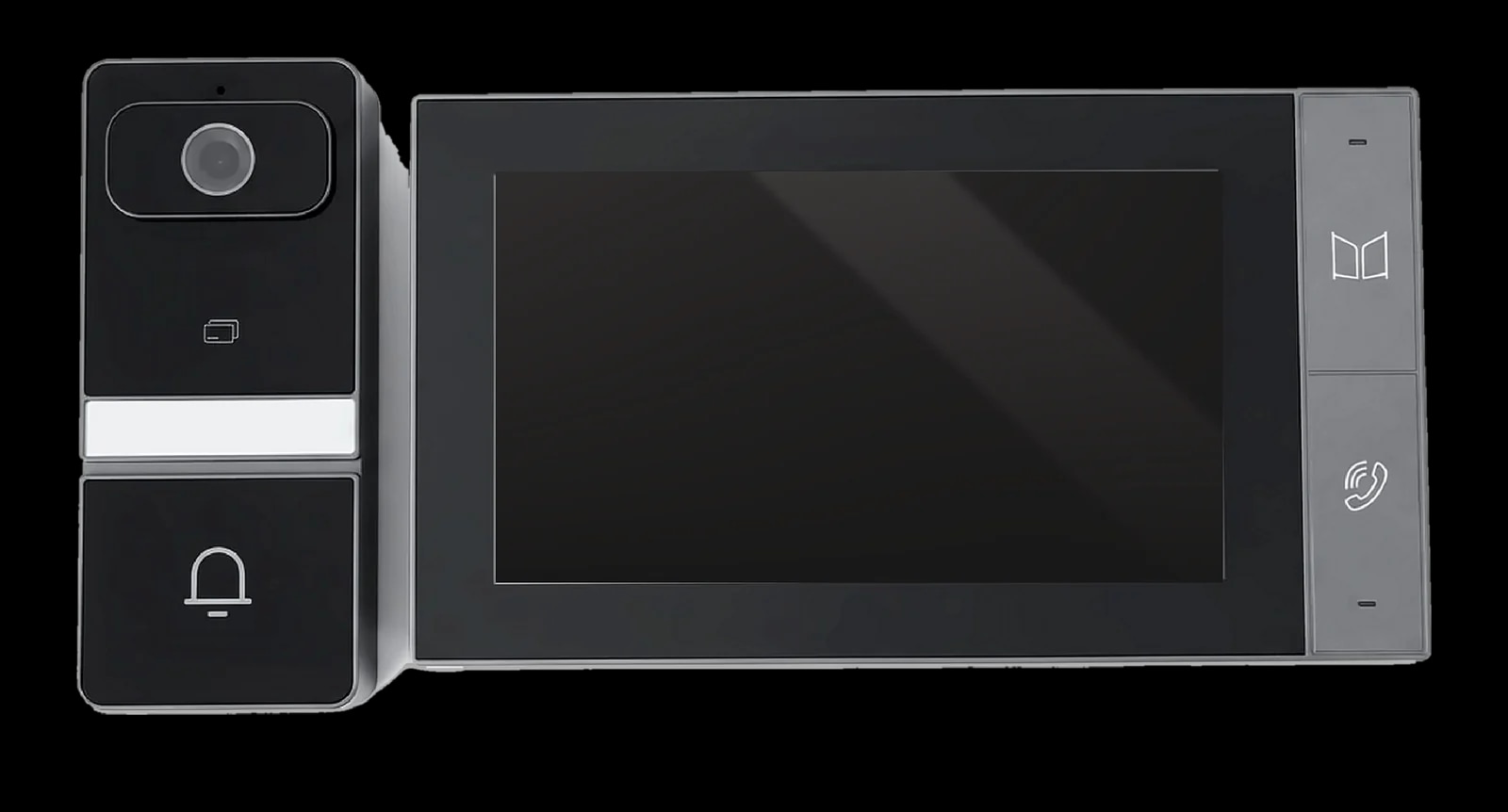
Three Spark products open by face: the I-500 and Spark I-400 outdoor stations, and the Spark S-303 kit, which pairs a Face ID outdoor station with a 7-inch indoor monitor. The other stations in the Spark video intercom range open by fingerprint, card or code. Face unlock on the door itself, on a smart lock, is covered in our guide to face, palm and fingerprint door locks.
Which Spark door stations open by face, fingerprint or card?
Two stations and one kit open by face, one station reads fingerprints, and every Spark door station reads cards.
| Door station | Entry methods | Camera | Screen | Power |
|---|---|---|---|---|
| I-500 and I-400 | Face (up to 5,000), IC card and NFC (up to 2,000), password, one-time code, indoor monitor | 1080p, white LED and infrared light | 8″ or 10″ touch screen | PoE over Cat5 or Cat6, or DC 15 V |
| S-303 kit | Face ID, IC card, indoor monitor, app | 3.0 MP binocular, 140°, infrared | 7″ touch monitor indoors | PoE or DC 24 V |
| I-220 | Fingerprint (500), IC card (1,000), indoor unit, exit button | 110°, white LED light | None | PoE or DC 12 V |
| Spark I-300 | IC and ID cards (2,000), six-digit password, Wiegand reader | 150°, white LED, PIR motion | 4.5″ touchscreen | PoE or DC 12 to 15 V |
| Spark I-100 | NFC card, indoor monitor | 2 MP wide angle, infrared | None | PoE or DC 12 to 15 V |
| Spark I-50 | IC card, indoor monitor | 2 MP, 120°, infrared | None | PoE or DC 12 to 15 V |
The I-500 and I-400 list the same specifications and differ in finish: black glass on a light grey base (I-500) or a grey aluminium frame (I-400).
Door stations that open by face or fingerprint
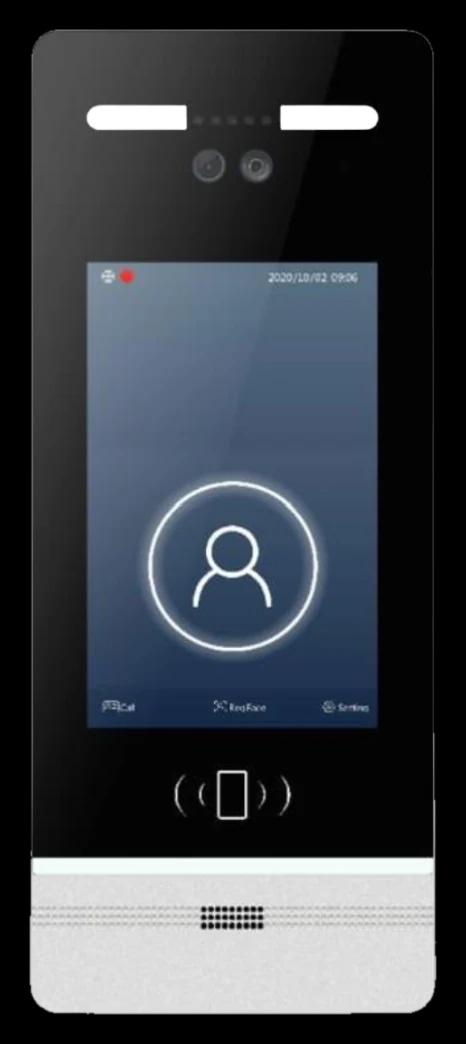
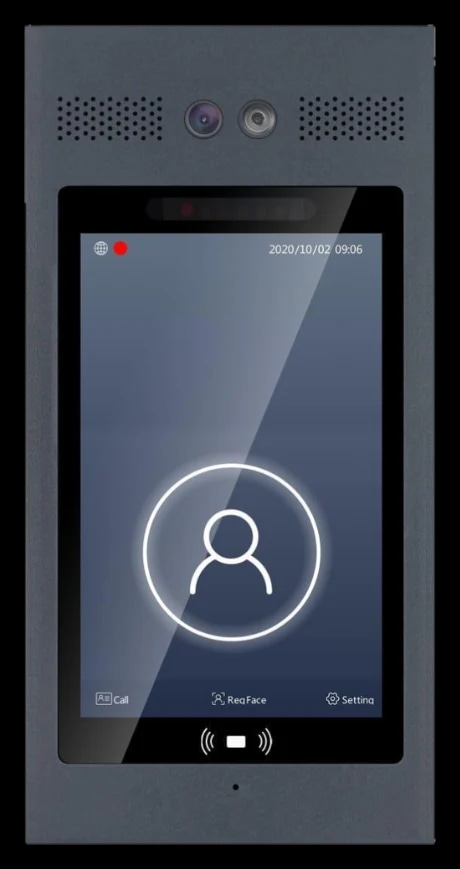
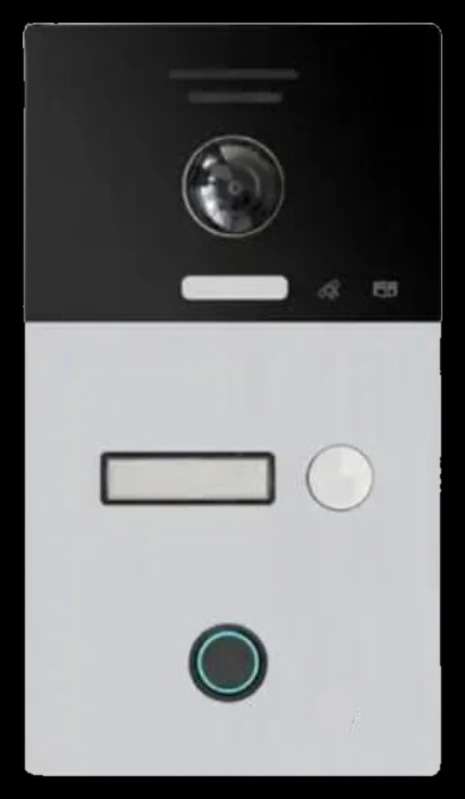
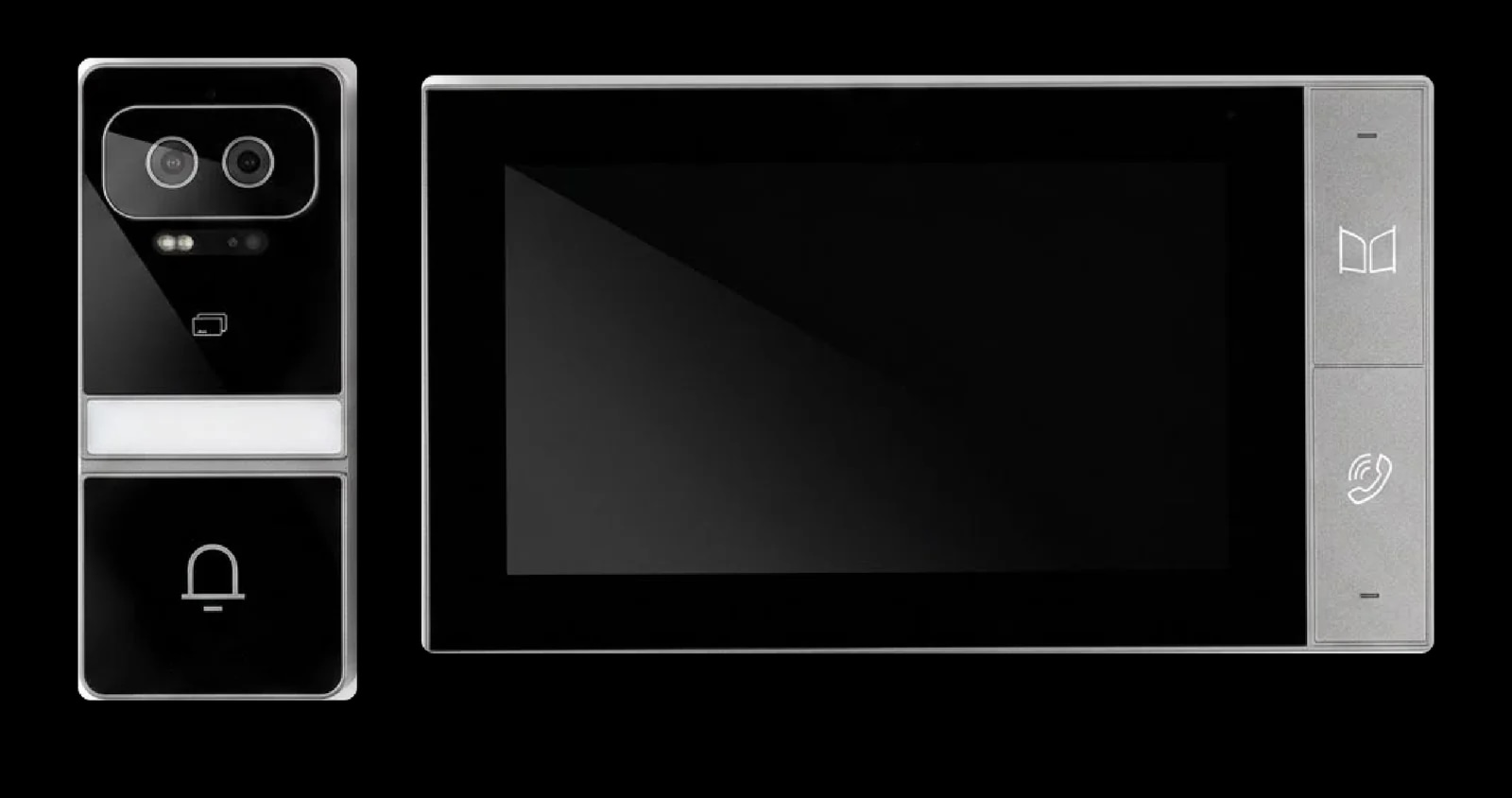
Face recognition door station: I-500, I-400 and S-303
The I-500 and I-400 are made for a building entrance. Liveness detection, on by default, means only a real person can unlock: a printed photo won't work. The building administrator can switch each way in on or off:
- Face: up to 5,000 registered faces, each linked to a resident's IC card.
- IC card and NFC: Mifare cards at 13.56 MHz, up to 2,000.
- Password: a public password, a resident's own password, or a one-time dynamic code from the indoor monitor.
- From inside: the resident unlocks from the indoor monitor during a full-duplex video call.
Human-body sensing can light the screen as someone walks up, and face data backs up to an SD card. Both stations are rated IP55 and IK07, work from -40 °C to +65 °C, and offer menus in English, Arabic, and Simplified and Traditional Chinese.
S-303: Face ID in a ready kit
The S-303 outdoor station uses a 3.0 MP binocular camera for Face ID with liveness detection, which its product page calls resistant to spoofing. It also opens by IC card and pairs with the Tuya and Smart Life apps, so you can answer and unlock from your phone.
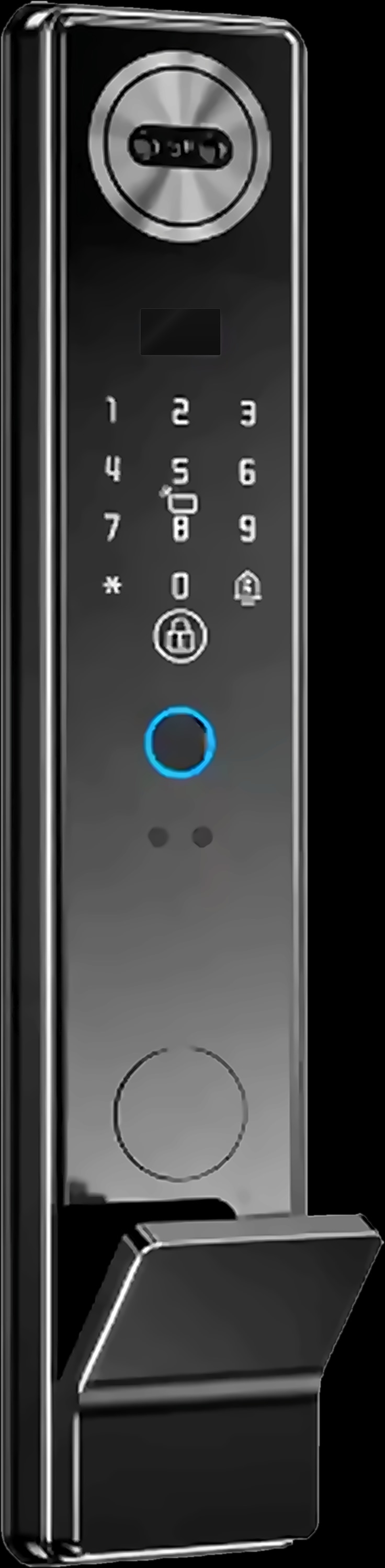
Intercom with fingerprint: the Spark I-220
The I-220 is Spark's fingerprint door station: up to 500 fingerprints and 1,000 IC cards at 13.56 MHz, a 110° camera with a white-LED night light, and full-duplex talk.
Fingerprints and cards are managed from the indoor unit's System Settings, opened with the project password: enter the room number, choose Add Mode, and place a finger twice or present a card. Two beeps confirm each one.
- Separate households: changes on one indoor unit don't touch other households.
- Delete one or all: remove a single card or fingerprint, or clear a household with Delete All.
- Reset keeps people: a factory reset keeps registered cards and fingerprints.
Up to four door units work in one I-220 system, and the Spark S-110 monitor can add or delete fingerprints and cards on a compatible outdoor station; a Spark partner confirms the pairing. The I-220 is rated IP65, works from -40 °C to +50 °C and mounts at 120 to 160 cm, away from backlight.
Intercom with card reader: which cards and codes work?
Every Spark door station opens by card, but not every station reads the same card, so check the type before you order cards for residents or staff.
- I-500 and I-400: Mifare IC cards at 13.56 MHz and NFC, up to 2,000.
- I-300: IC cards (13.56 MHz Mifare) and ID cards (125 kHz EM), up to 2,000, plus an external Wiegand reader.
- I-220: IC cards at 13.56 MHz, up to 1,000.
- I-100 and I-50: NFC cards on the I-100 and IC cards on the I-50, managed from the indoor monitor for each household.
- S-303: standard IC cards at the outdoor station.
Codes cover visitors and days without a card: a six-digit public password on the I-300, and on the I-500 and I-400 also a resident's own password or a one-time code from the indoor monitor, useful for a relative visiting once.
Door stations that open by card
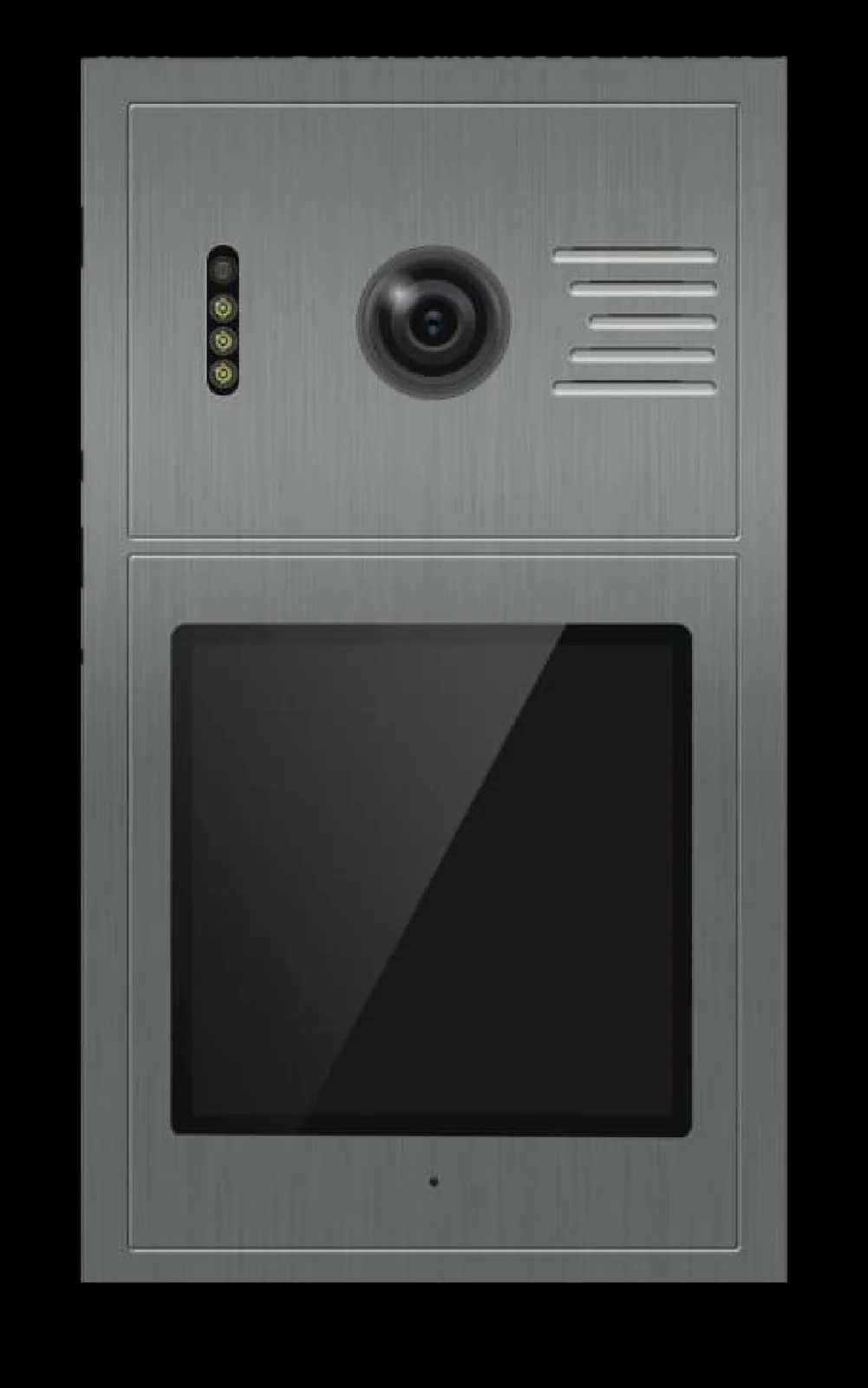
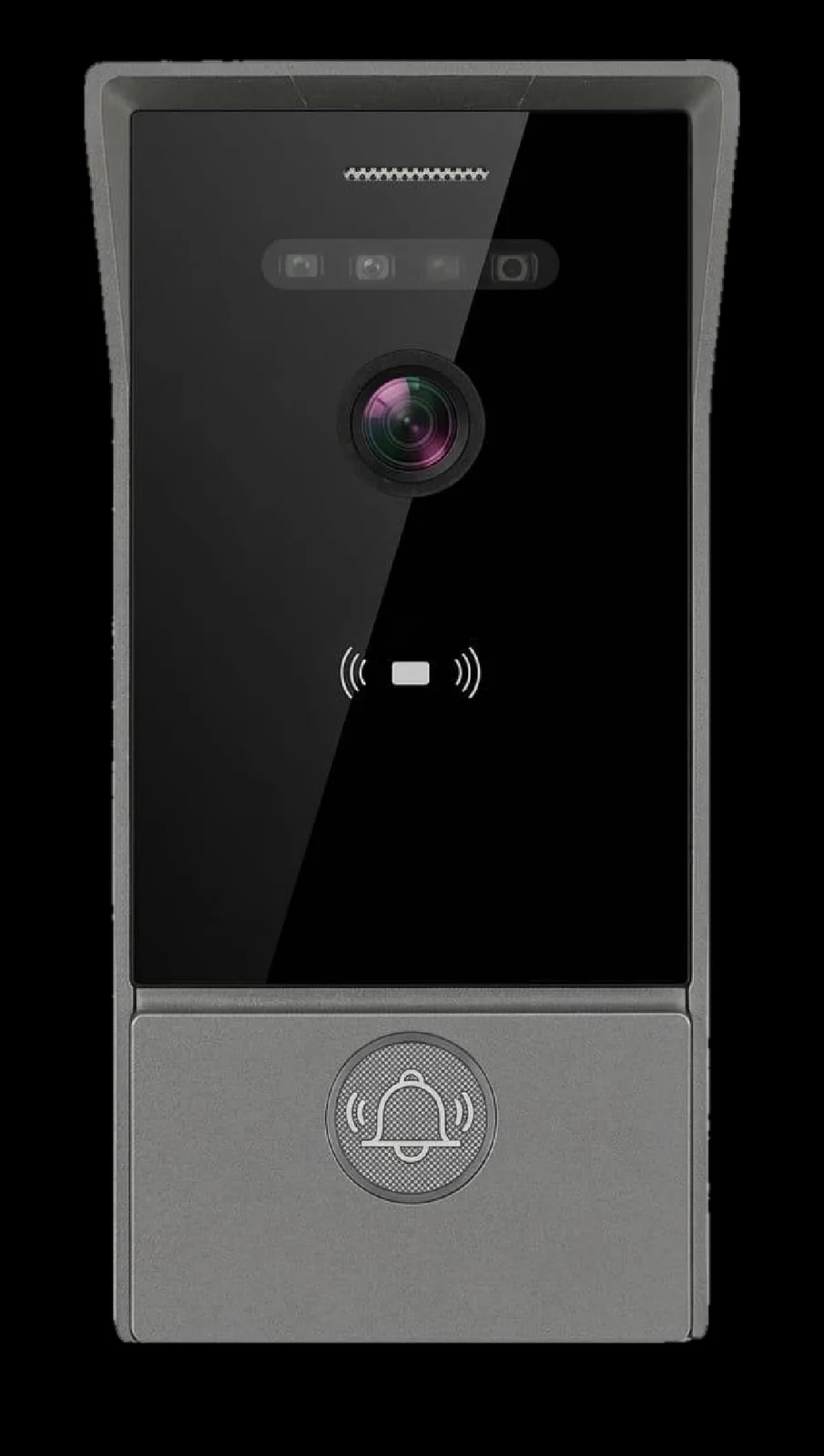
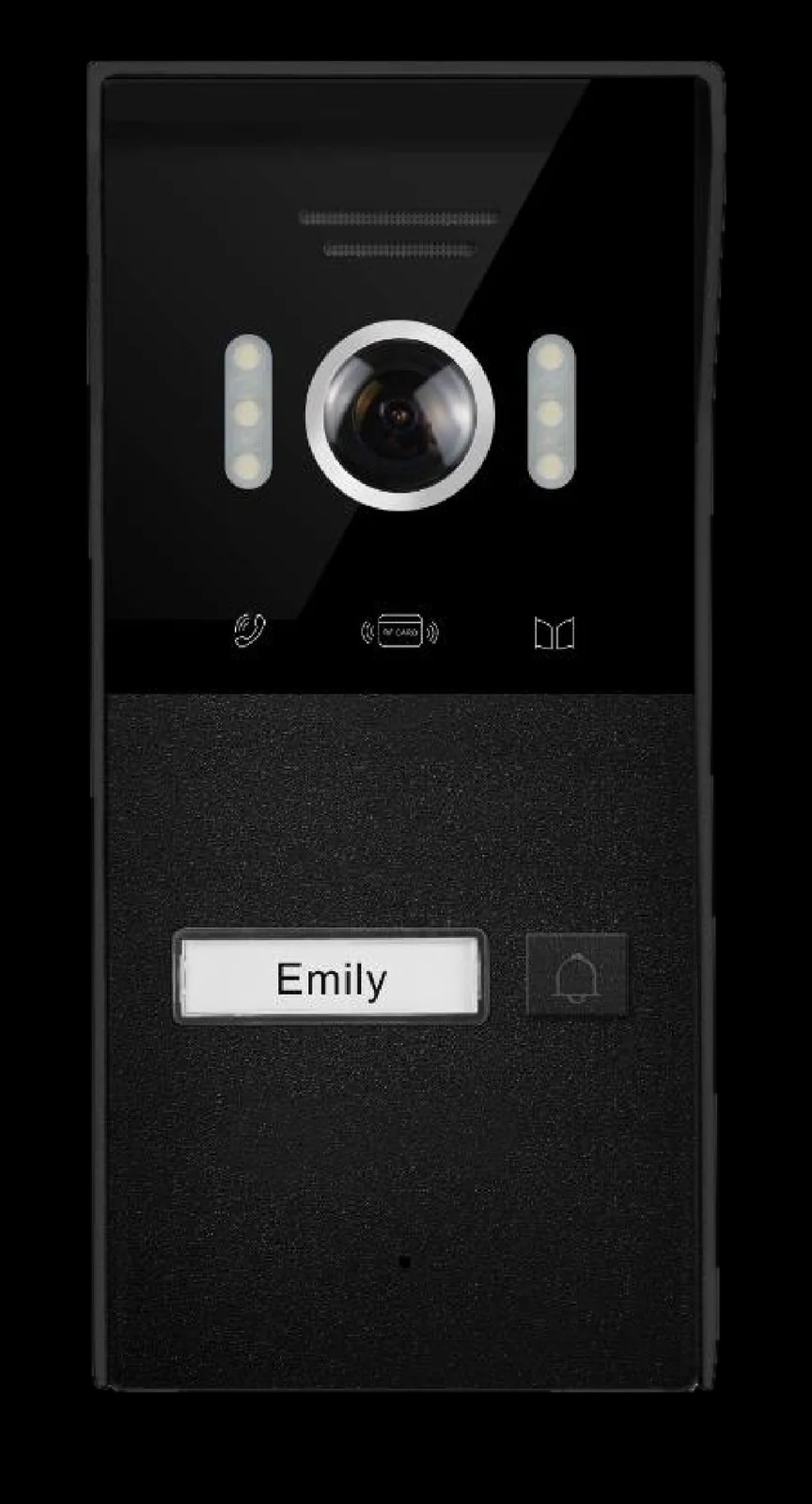
Calling, answering and unlocking from the indoor monitor
Keyless entry is for residents; visitors still call. The resident sees and talks to them in full duplex on the indoor monitor and taps Unlock to open the door.
On the I-500 and I-400, visitors enter a room number or pick a name from an imported list, and dialling 888 or 1000 reaches the security station or the management centre.
Indoors, the Spark S-210 10-inch monitor shows the visitor with the outdoor unit's room number and can also release a lock on its own relay. The S-110 does the same, takes messages, and sends door calls to your phone over Wi-Fi; only its main account can unlock. For monitors and phone answering by home type, see video intercoms for a villa or an apartment building.
Lock relay, exit buttons and door contacts: the lock and the gate
The intercom doesn't replace the lock; it releases it. Each Spark door station drives a lock from its relay, and most add inputs for an exit button and a door contact.
| Door station | Lock output | Exit button | Door contact |
|---|---|---|---|
| I-500 and I-400 | Relay NO / NC, max AC 125 V 0.5 A or DC 30 V 2 A; power-on or power-off unlocking | Two: lock and gate | Two: lock and gate, with a door-open alarm |
| I-300 | Relay NC / COM / NO, electric or magnetic lock set by DIP switch | One | Not listed |
| I-220 | LOCK+ / NC / COM / NO: electric or magnetic lock, power-up unlocking | Yes | Yes, door magnetic detection |
| I-100 and I-50 | Two lock outputs: Lock 1 (NO / NC) and Lock 2 | One per lock | One per lock |
| S-303 kit | One motor-operated electric lock, 12 V, max 500 mA | Not listed | Not listed |
For a door and a gate, the I-500 and I-400 keep separate inputs for each, and the I-100 and I-50 have two lock outputs. A Spark partner checks how a motorised gate connects. For 2-wire or Ethernet cabling, see our guide to 2-wire vs IP intercoms.
Who keyless entry at the intercom suits
Keyless entry at the intercom pays off wherever many people share one door, and a lost card is simply deleted from the system.
- Apartment buildings: in Jordan, many families share one building entrance, and face recognition access control starts there: an I-500 or I-400 lets each resident in by face, card or code. When a family moves out, its cards and faces are removed.
- Villas with family and staff: family members use a face on the S-303 or a fingerprint on the I-220; a driver or a cleaner gets a card you delete when they leave.
- Offices and clinics: staff change over time, so cards and fingerprints managed in one place suit the office door.
- 1
Choose the ways in
Face, fingerprint, card or code: the method decides the station.
- 2
Pick the lock and the spot
A lock within the relay rating, and a position out of backlight.
- 3
Wire and register
Your electrician wires the lock, exit button and door contact; then you register each person.
- 4
Back up and test
Back up the I-500 or I-400 to an SD card, then test every way in and a visitor call.
Installers and architects can become a Spark partner to specify the station, monitors and lock for each entrance.
Questions people ask about face recognition intercoms
Can a photo open a face recognition intercom?
Not on Spark's face stations. The I-500 and I-400 have liveness detection on by default, so a printed photo won't work, and the S-303 also has liveness detection.
How many faces can a face recognition intercom store?
The I-500 and I-400 store up to 5,000 faces and 2,000 IC cards. The S-303's product page gives no face capacity; a Spark partner can confirm it.
Is there an intercom with a fingerprint reader?
Yes, the Spark I-220. It stores 500 fingerprints and 1,000 IC cards, registered from the indoor unit and kept separate for each household.
What cards work with an intercom card reader?
IC cards at 13.56 MHz work on the I-500, I-400, I-220 and I-300, which also reads 125 kHz ID cards. The I-500, I-400 and I-100 read NFC, and the I-50 and S-303 read IC cards.
Does a face recognition intercom work at night?
The I-500 and I-400 switch on white LED and infrared light together, and the S-303 has infrared night vision. The product pages give no recognition distance, speed or night figures, so test the station at your entrance after sunset.